
 Suomi
Suomi
Planning a Public Dry Toilet – A Guide for Nature and Tourist Sites

Published 6 October 2026
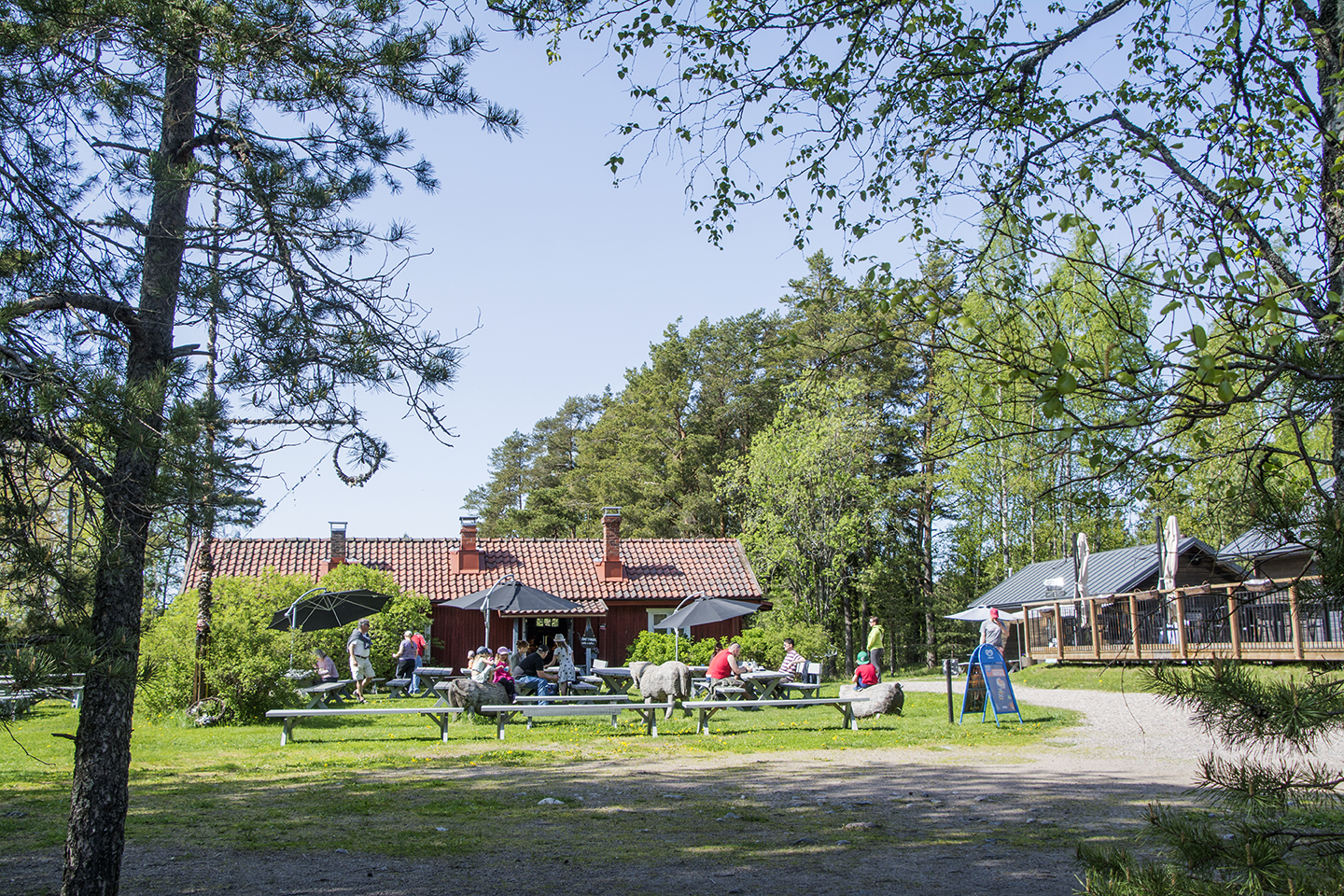
Nature destinations are drawing more visitors than ever – to national parks, archipelagos, wilderness shelters and remote harbours. The most beautiful sites are often far from sewers and other infrastructure, and as visitor numbers grow, the toilet easily becomes the site’s biggest pain point: there are too few toilets, they are in poor condition, or they smell.
Getting the planning right decides whether visitors leave with a good or a bad impression. A properly designed composting dry toilet is odour-free, reliable and easy to maintain – even at busy sites.
Over the decades, Pikkuvihreä has delivered hundreds of dry toilet solutions to national parks, nature harbours, beaches, nature trails and tourist destinations in Finland and abroad – from Icelandic hot springs to the mountains of Mongolia. In this guide, we have gathered the most important things to consider when planning a public toilet.
Summary:
- Place the toilet close to trails and services, and make sure maintenance equipment can reach it.
- Check accessibility requirements at the very start of planning.
- For public use, choose a simple, non-diverting composting toilet.
- With batch composting, servicing takes minutes with no downtime.
- Agree on who is responsible for maintenance, and how often, before the toilet is taken into use.
Why choose a dry toilet for public use?
- No sewer connection or major groundwork needed
- Significantly more affordable than a flush toilet
- Keeps working during power cuts and other disruptions
- Ideal for nature sites and remote locations
- Withstands heavy use and is easy to maintain
- Enables environmentally friendly waste treatment
A good toilet gives your site a competitive edge
Toilets deserve attention: even a great travel experience can be spoiled if the toilet is remembered as a horror story – or if there was no toilet at all. On the other hand, a clean, well-functioning dry toilet is a competitive advantage, and not an expensive one. Visitors interested in eco-tourism also increasingly expect services that are sustainable and in harmony with the surrounding nature.
If you already have a building for it, the equipment for two toilets typically costs around €1,000–2,000. Running costs are low too: no wastewater is produced, and in most cases all waste can be treated on site, so no transport is needed.
Part 1: Designing the public outhouse building
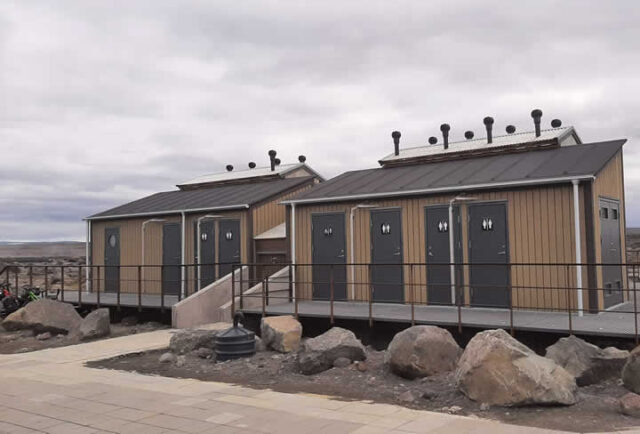
When talking about public dry toilets, attention often focuses on the toilet unit itself. Yet the building affects the user experience just as much. A well-designed building makes the toilet easier to use, improves accessibility and reduces maintenance needs for years to come.
When designing a public outhouse, pay particular attention to the location, accessibility and ease of maintenance.
Location and access
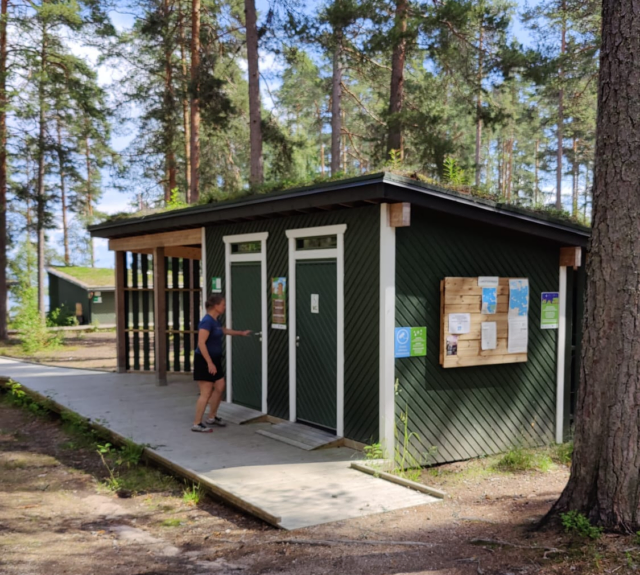
The location of a public dry toilet affects both the user experience and how easy it is to maintain. The toilet should be close enough to services, trails or attractions to actually get used. There is no need to place it far away from other buildings for fear of odours.
Think about maintenance when choosing the location, too. Although composting toilets are reliable, they need emptying, cleaning and restocking from time to time. Maintenance staff should be able to reach the site as easily as possible – for example with an ATV, a service vehicle or whatever equipment is available.
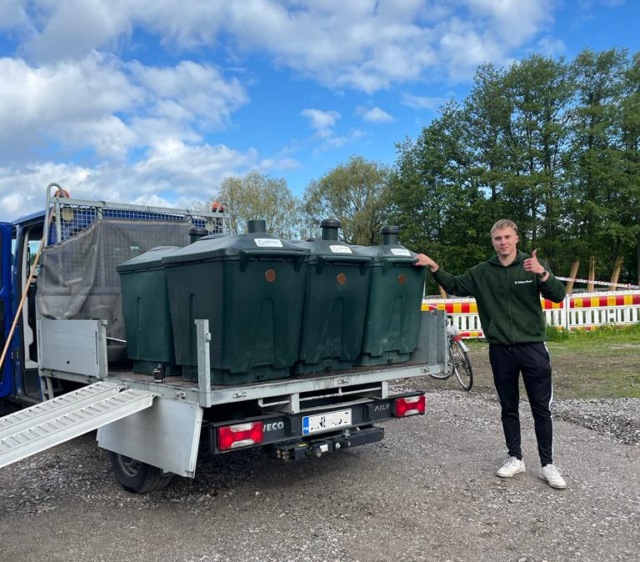
If the toilet is built on an island, along a nature trail or at another hard-to-reach site, plan the transport of the building in advance as well. In such cases, an outhouse assembled from prefabricated elements is often more practical than a fully assembled building.
A well-chosen location makes life easier for both users and maintenance staff, and reduces maintenance costs over the whole life cycle of the building.
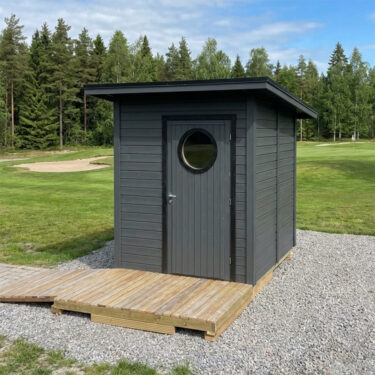
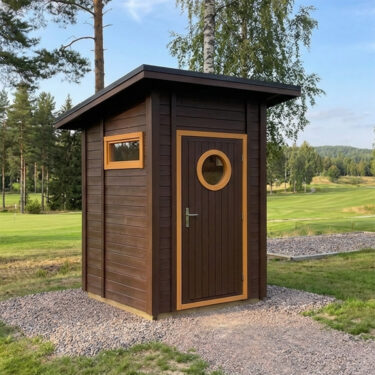
Consider accessibility from the design stage
If the site should be accessible to as many people as possible, consider accessibility already when designing the toilet building. Changes made afterwards are usually more difficult and more expensive.
In an accessible toilet, attention is paid to access routes, ramp gradients, door widths, thresholds and the interior dimensions of the building. Grab rails and other aids also make the toilet easier to use for older people, people with reduced mobility and those travelling with children.
Not every public dry toilet needs to meet accessibility requirements, however. If the site itself cannot be reached without barriers – because of the terrain, long staircases or other obstacles – the requirements for the toilet building are usually not the same as at fully accessible sites.
Accessibility requirements and recommendations vary from country to country, so always check them case by case at the start of planning – your national building regulations or accessibility guidelines are a good place to start. In terms of dimensions, dry toilets are generally subject to the same requirements as flush toilets.
A small storage space makes maintenance easier
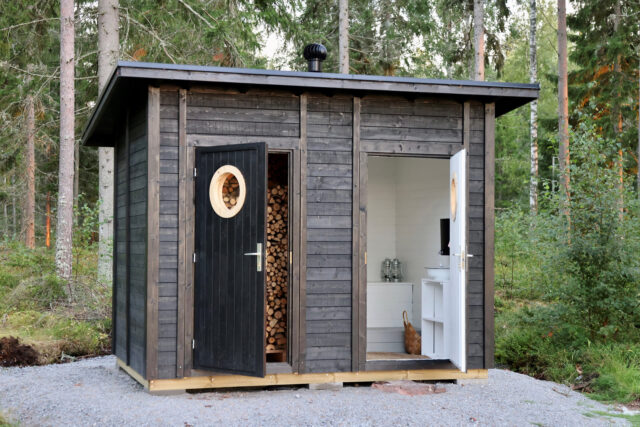
A dry toilet in public use often needs storage for bedding material, toilet paper, cleaning equipment and other maintenance supplies. A practical storage space makes servicing easier and reduces the number of maintenance visits, especially at remote sites.
Storage space is also useful when servicing a composting toilet. With Green Toilet systems, for example, a full container can be swapped for an empty one in a few minutes, after which the full container needs time for post-composting.
Checklist for designing a public outhouse building
✓ Place the toilet where users can easily find it.
✓ Make sure maintenance equipment can reach the site as easily as possible.
✓ Plan the transport and installation of the building already at the purchasing stage, especially on islands and at remote sites.
✓ Check accessibility requirements and take them into account as early as possible.
✓ Reserve space for bedding material, toilet paper, cleaning equipment and other maintenance supplies.
✓ Plan in advance where spare containers or post-composting material can be stored safely and tidily.
Part 2: Choosing the composting toilet
Once the building is planned, attention turns to the toilet system itself. For public use, the most important selection criteria are usually capacity, reliability and ease of maintenance. The toilet must cope with fluctuating numbers of users, be easy to use even for first-timers, and allow quick servicing without long interruptions.
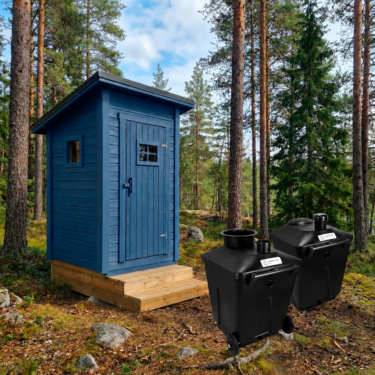
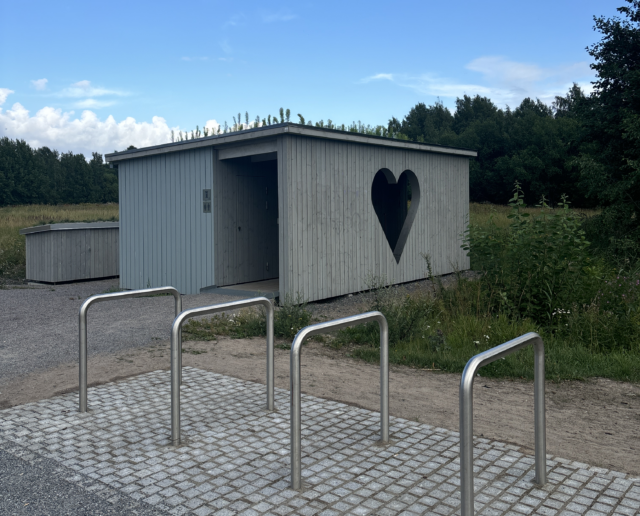
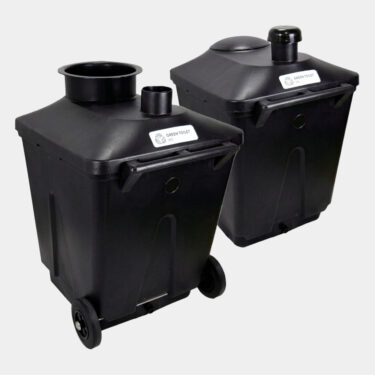
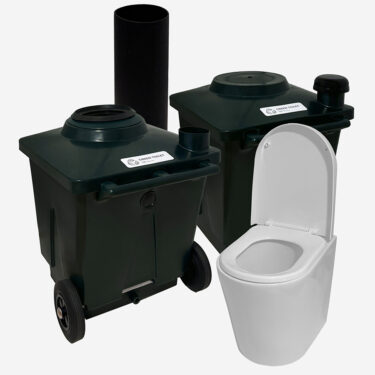
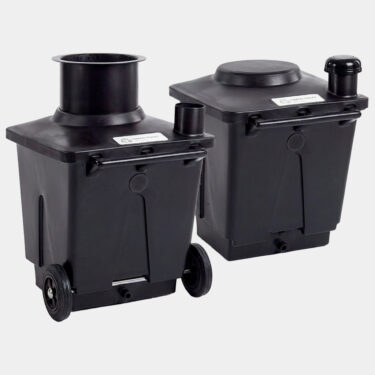
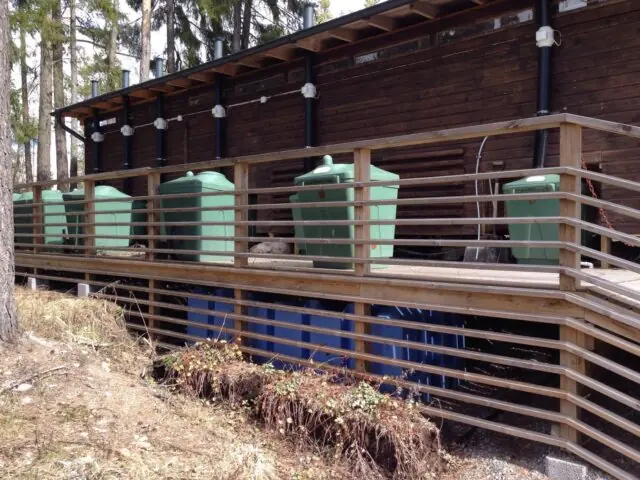
In Pikkuvihreä’s experience, a batch composting dry toilet is the most practical solution at most public sites. The Green Toilet 330 in particular has proven itself in national parks, hiking destinations, harbours, beaches and other public sites where visitor numbers can vary greatly with the seasons.
Simple works best in public use
A public toilet must be as easy to use as possible. Users may include children, older people, foreign tourists and first-timers, so the toilet should not require any special instructions.
That is why urine-diverting seats have generally not proven to be the best solution at public sites. In practice, not all users know how – or notice the need – to use a diverting seat as intended, and the system then works less well. Diverting designs also have more parts that can get dirty, clog or need servicing.
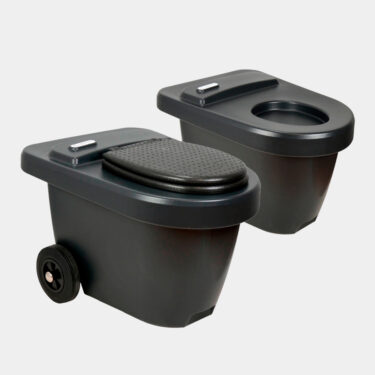
A traditional, non-diverting composting toilet is often the most reliable option. For the user, it is as simple as an ordinary toilet seat, leaving little room for mistakes. The design is also durable and well suited to sites where the toilet is used by many different people.
Read more: Non-Diverting and Urine-Diverting Dry Toilets — Which Should You Choose?
Spare containers make servicing quick
The biggest challenge with a public dry toilet is usually not the composting itself, but organising maintenance. The toilet may be on an island, in a national park or at another site where maintenance visits are kept to a minimum. Emptying the toilet must therefore be quick and free of heavy work.
This is why systems based on batch composting have become so popular at public sites. The Green Toilet 330, for example, is built around a large 330-litre container which, once full, can be replaced with an empty one straight away. The toilet stays in use at all times, with no downtime during servicing.
The full container can be moved aside to post-compost in peace. This gives the compost more time to mature, which makes later handling easier. The method is simple and reliable, and it suits sites where visitor numbers vary with the seasons.
Another advantage of batch composting is that the toilet never has to be emptied in the middle of an unfinished composting process. Each container forms its own batch that can be handled on its own schedule. This reduces maintenance work and improves the quality of the end result.
Thanks to its quick servicing, large capacity and simple design, the Green Toilet 330 is one of the most commonly chosen composting toilets for public sites.
The right accessories complete the system
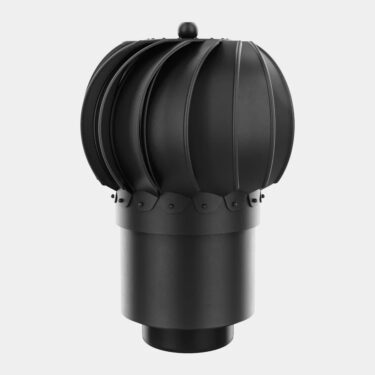
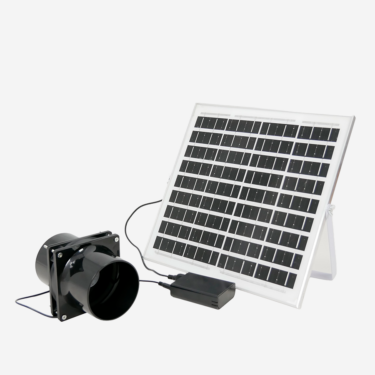
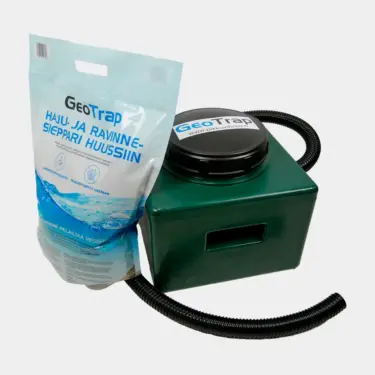
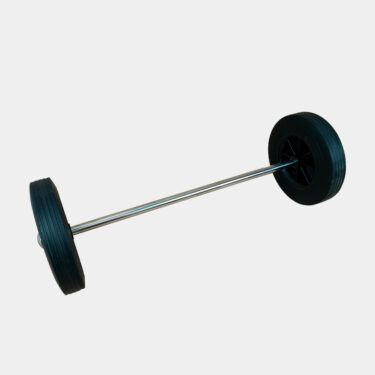
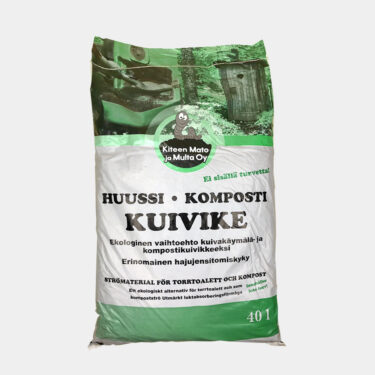
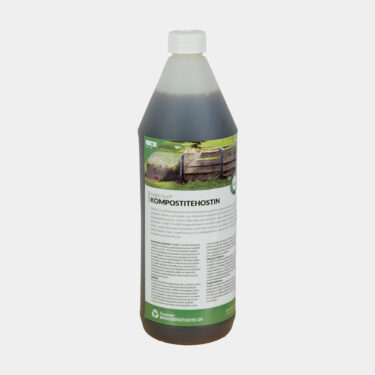
In addition to the toilet unit, a well-functioning system includes accessories chosen for the site. These may include ventilation solutions, bedding containers, leachate treatment systems and various accessories that make maintenance easier.
The choice depends on factors such as the number of users, the location of the site, the availability of mains electricity and environmental requirements. Ventilation, for example, can be provided either by an electric duct fan or by a wind-driven ventilator, depending on site conditions.
Site conditions show in the solutions in practice. In a guest harbour, particular attention is paid to careful leachate treatment so that toilet waste does not end up in the water. In a national park, on the other hand, long distances put the emphasis on ease of maintenance and sufficient container capacity. That is why accessories and installation should always be planned case by case, as part of the whole system rather than as separate products.
Checklist for choosing a composting toilet
✓ Choose the toilet capacity according to the actual number of users at the site.
✓ Favour simple and reliable solutions for public use.
✓ Remember that non-diverting toilets are usually easier to use and maintain when users vary.
✓ Plan maintenance in advance and make sure spare containers can be handled smoothly.
✓ Reserve space for post-composting full containers.
✓ Choose ventilation, bedding material and other accessories according to site conditions.
✓ Look at the toilet as a whole, in which the building, toilet unit and accessories work together.
Part 3: Maintenance makes or breaks a toilet’s reputation
All too often we come across outhouse sites where the original installation was good, but maintenance has since been neglected – sometimes for years. A dry toilet is not maintenance-free; it must be serviced as often as its usage requires. Just as flush toilets at service stations are cleaned several times a day, a toilet at a busy nature site may need daily attention in peak season.
Make maintenance as easy as possible already at the purchasing stage. It must be clean, ergonomic and quick for the person doing it, because the toilet often cannot be out of use for long. It is just as important to plan in advance how toilet waste will be handled safely and easily all the way to the end.
Checklist for organising maintenance
✓ Agree on who is responsible for maintenance and how often the toilet is checked.
✓ Set cleaning and inspection intervals according to peak-season visitor numbers.
✓ Make sure there is always enough bedding material, toilet paper and cleaning equipment available.
✓ Plan where full containers will post-compost and how the finished compost will be used.
✓ Check local waste management regulations on composting toilet waste.
Frequently asked questions about public toilets
Does a public dry toilet smell?
A correctly sized and ventilated composting dry toilet is odour-free even in busy use. The key factors are effective ventilation, sufficient use of bedding material and regular maintenance. Read more: Ventilation of dry toilets and Does it smell?
How much does a public toilet cost?
The total cost consists of the toilet units, the outhouse building, accessories, and transport and installation. If the building is already in place, the equipment for two toilets typically costs around €1,000–2,000. Running costs are low because no wastewater is produced and waste usually does not need to be transported away.
Does a public toilet have to be accessible?
Not always. It depends on whether the site itself can be reached without barriers. If the site is accessible, the toilet building should be designed to be accessible from the start. In terms of dimensions, dry toilets are generally subject to the same requirements as flush toilets.
Do I need a permit for a public toilet?
Depending on its size and location, the outhouse building may require a building permit, and composting toilet waste is subject to local waste management regulations. Practices vary between countries and municipalities, so check with your local building authority and waste management authority at the start of planning.
How often does a public dry toilet need maintenance?
It depends on usage. Cleaning and restocking are done much as in a flush toilet – at the busiest times even daily. The container is changed when it is full. With the Green Toilet 330 system, the swap takes just a few minutes.
Is a urine-diverting dry toilet suitable for public use?
Usually not the best choice. Not all users know how to use a diverting seat correctly, which weakens the system. A non-diverting composting toilet is as easy to use as an ordinary toilet seat, which is why it is usually the most reliable choice at public sites.
How many toilets does a site need?
The number of toilets depends on the number of visitors and how often you want to change containers. Container capacity is a good basis for sizing. In usage tests, the 330-litre container of the large Green Toilet holds around 800 uses for “number twos”. Liquid does not fill the container, because excess urine is drained to collection or filtration.
Actual capacity depends on conditions and, for example, on how much bedding material is used. If a site sees around 20 “number two” visits a day in peak season, one container lasts about 40 days. When deciding on the number of toilets, also consider peak times: a busy site needs several toilets or a spare container to avoid queues, even if container capacity would be sufficient.
The Green Toilet system is a safe choice in this respect, because with spare containers you never run out of capacity.
Need help planning a public dry toilet?
The success of a public dry toilet depends on many details, but when planned correctly, it can serve users reliably for decades. We are happy to help you put together the right solution for your site – whether it is a national park, a nature harbour, a dog park, a beach, a tourist destination or any other public setting – free of charge and with no obligation. Well-functioning outhouses are close to our hearts.
