Article updated 19 October 2026
Pikkuvihreä has been involved in designing the Helsinki Outhouses from the very beginning, and at the heart of every outhouse is a Green Toilet 330 composting toilet made by Pikkuvihreä. In this article, we explain where the Helsinki Outhouses are, how they work and how the whole concept came about.
Where are the Helsinki Outhouses?
There are now three Helsinki Outhouses. They have deliberately been placed at different types of sites so that the city can test which outhouse solution suits which kind of location.
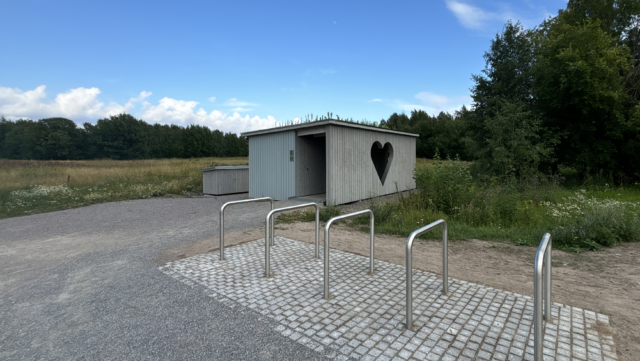
Pornaistenniemi, Vanhakaupunki
The first Helsinki Outhouse opened on 30 September 2021 in the Pornaistenniemi recreation area on the shore of Vanhankaupunginlahti Bay. It serves a busy urban outdoor area that is also close to the Museum of Technology, a bird-watching tower, a nature trail and the Vanhankaupunginkoski rapids. The outhouse has two toilet rooms, a urinal section and a small maintenance room. See the location on Google Maps.
Uutela, Vuosaari
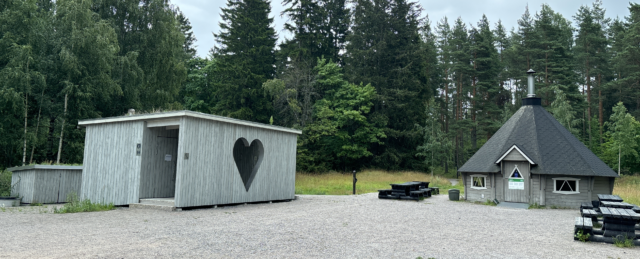
The second Helsinki Outhouse was completed in autumn 2022 next to the Uutela campfire hut (kota), just before the school autumn holidays. Uutela represents a nature site with fewer visitors than Pornaistenniemi. The outhouse replaced the portable toilet that previously served the area. See the location on Google Maps.
Malmi
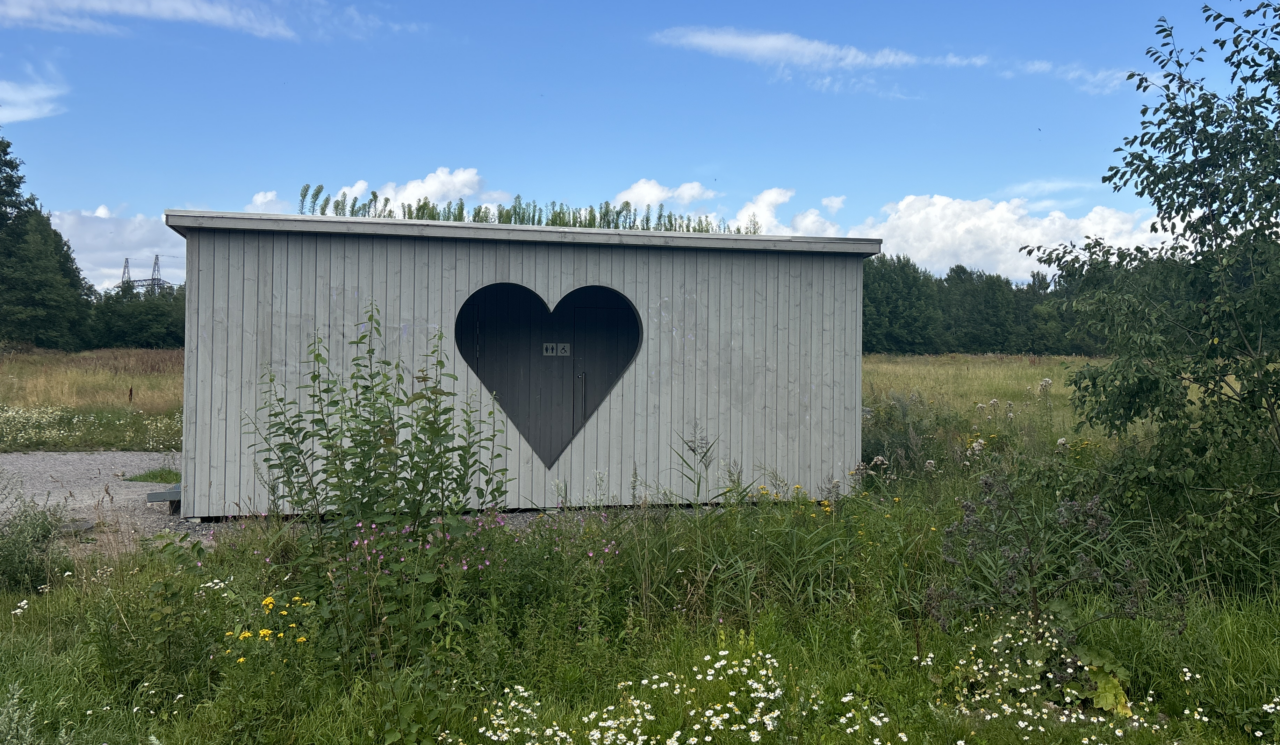
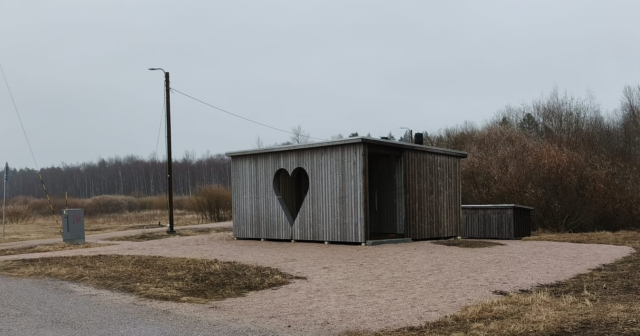
The third Helsinki Outhouse is in Malmi and was taken into use in late summer 2025. In terms of visitor numbers, Malmi falls between the two earlier Helsinki Outhouse sites. The Malmi area is developing into a recreational area, and its visitors include joggers and birdwatchers. See the location on Google Maps.
What is a Helsinki Outhouse?
The Helsinki Outhouse (Helsinki-Huussi in Finnish) is a public toilet designed for urban use, with composting dry toilets instead of flush toilets. Toilet waste is not flushed into a sewer. Instead, solid waste is collected and pre-composted on site in Green Toilet 330 dry toilets.
The aim of the concept is to make toilets easier to find along popular outdoor routes, while also dispelling the belief that dry toilets do not work in public use. The Scandinavian design of the outhouses is by NRT Architects. The idea was to create a recognisable and friendly building that city residents can easily spot when nature calls. Finland’s largest daily newspaper, Helsingin Sanomat, called it the most beautiful outhouse in the world even before the first one was finished.

What does a Helsinki Outhouse look like inside?
The interiors are designed to be accessible without compromising on style. The bench-style seat familiar from traditional Finnish outhouses blends seamlessly into the dark green interior, and a wide window in the back wall lets in plenty of natural light. Wide plank floors and steel details reflect modern Scandinavian style.
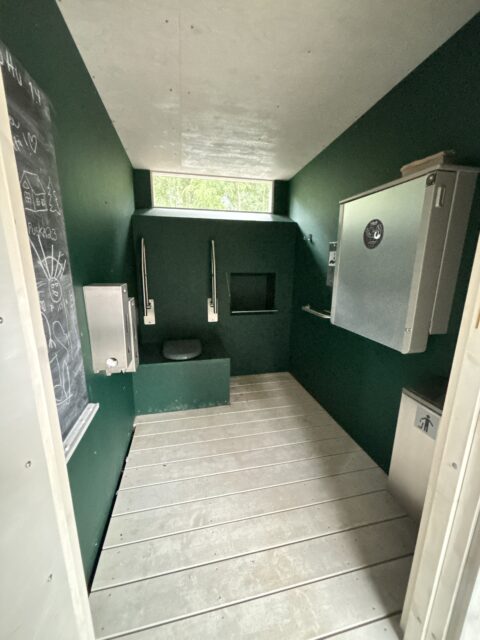
One interesting detail is the chalkboards on the interior walls. Users can leave messages for each other, and the boards also help curb the graffiti that public toilets tend to attract.

The Pornaistenniemi outhouse also has Pikkuvihreä’s 100% waterless urinals. They shorten queues on busy summer days and reduce the liquid load on the dry toilets, which helps keep the outhouse odourless.
How does a Helsinki Outhouse work?
Just like an ordinary toilet for the user
You enter the outhouse from a side corridor. Using it is just like using an ordinary toilet: lift the lid, and if needed, lower the support rails next to the seat to make moving easier. Toilet paper can go into the compost, and there is a separate bin for sanitary towels and other waste. Finally, you cover your deposit with ecological bedding material and clean your hands with hand sanitiser. Picture instructions in the outhouse make sure everyone can use the dry toilet without problems.


Helsinki Outhouses are used by a very diverse group of people: children, older people and tourists from the other side of the world. That is why simplicity is key, as we also explain in our guide to planning a public dry toilet.

Green Toilet 330 at the heart of the outhouse
Green Toilet 330 composting toilets are installed under the outhouse seats. Waste drops from the seat opening straight into the Green Toilet container, where it starts to compost without water or electricity. The Green Toilet separates urine from solid waste with a built-in false bottom, and the urine is piped to an underground holding tank or to filtration.
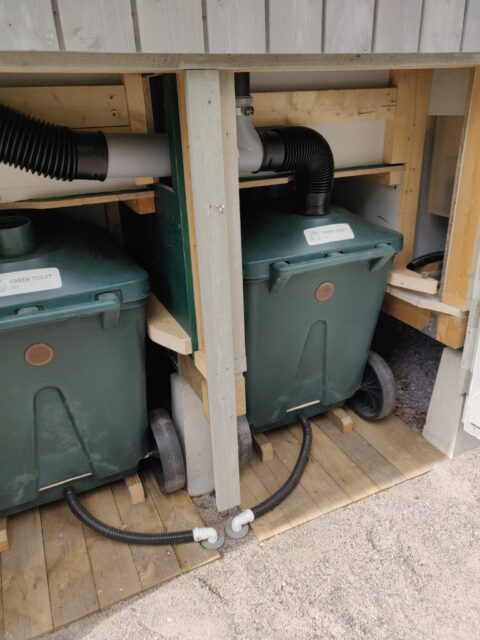
The Green Toilet’s sturdy handle and wheels make maintenance easy. For servicing, it is important that the containers can be handled by hand without heavy machinery or equipment.
Maintenance and cleaning
The Helsinki Outhouse sites are very different from each other, so the container change interval varies from about 2 to 6 weeks. The full container is wheeled out and replaced with an empty spare container. Full compost containers are left in the outhouse’s maintenance room to compost and are only taken to a composting centre for final treatment once they are almost finished soil.
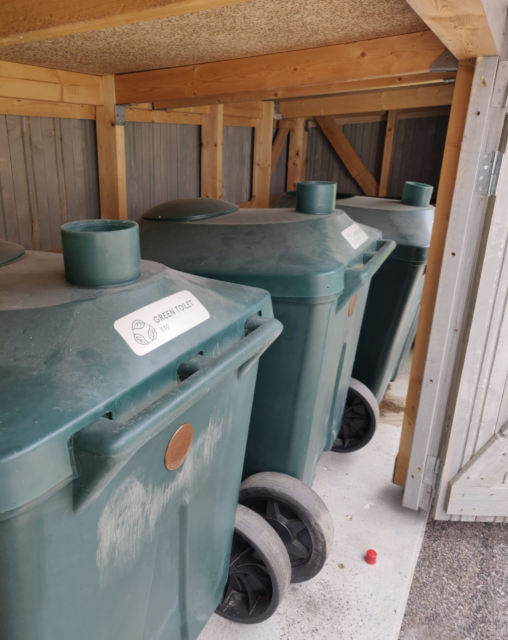
Cleaning is arranged as in any public toilet. At the busy sites, the outhouses are cleaned daily during the summer season, as they should be.
From pilot to standard models – how the Helsinki Outhouses came about
The idea of an outhouse network in urban Helsinki was first raised back in 2018. On busy outdoor routes, people often searched for a toilet in vain. Elina Nummi, a project planner at the City of Helsinki and the “mother” of the Helsinki Outhouses, believed that the outhouse so familiar to Finns could also work in an urban environment. She championed the idea within the city and explored the options with both the Finnish Dry Toilet Association (Käymäläseura Huussi) and equipment manufacturers.
Pikkuvihreä’s Green Toilet 330 was chosen as the toilet unit at an early stage, which allowed us to bring our experience of dry toilets at busy sites into the design. The journey was not entirely smooth: although everyone agreed that more toilets were a good idea, there was plenty to solve, especially regarding maintenance and the handling of toilet waste.
The first outhouse was opened in Pornaistenniemi on 30 September 2021, when Deputy Mayor Anni Sinnemäki cut the ribbon. The Uutela outhouse followed a year later, and the third outhouse was completed in Malmi in 2025.

So far, the project has been a pilot. Its purpose is to test different configurations at different types of sites and to find a few standard models that can then be built directly around the city. Pornaistenniemi is a very busy urban site, whereas Uutela is a nature site with fewer visitors and no electricity at all. Users will hardly notice the difference, but the outhouse models have different technical setups and are maintained and serviced in slightly different ways.
In a public vote, Helsinki residents have already suggested more than 40 locations for new Helsinki Outhouses – the need is clearly there!
Why is a dry toilet a good choice for a public city toilet?
Helsinki is not alone with its toilet challenges. Many municipalities receive requests for public toilets, but budgets are tight, especially if a flush toilet is always the starting point. A public dry toilet can often be built for a fraction of the cost of a flush toilet, and both the initial investment and the running costs are well below those of a comparable flush toilet solution.
Portable toilets are not what residents want either. Plastic cabins fall far short in appearance and comfort, and they are prone to vandalism. The friendly Helsinki Outhouse, on the other hand, has been warmly received by its users.

Each Helsinki Outhouse has around 500–4,000 visitors a month. If every visit required a 4–6 litre flush in a flush toilet, this would use roughly 2–24 cubic metres of flushing water per outhouse per month. On top of that, the maintenance costs of a flush toilet building are clearly higher, partly because the building must be insulated and heated in winter to prevent the water pipes from freezing.
The Helsinki Outhouses are a pioneering project that shows dry toilets work even in busy urban use. If your municipality or site is considering something similar, read our guide to planning a public dry toilet.
Frequently asked questions about the Helsinki Outhouses
Where are the Helsinki Outhouses?
There are three Helsinki Outhouses: in Pornaistenniemi in Vanhakaupunki, in Uutela in Vuosaari, and in Malmi.
Is it free to use a Helsinki Outhouse?
Yes. The Helsinki Outhouses are free to use.
Are the Helsinki Outhouses open in winter?
Yes. The Helsinki Outhouses are open all year round.
Does a Helsinki Outhouse smell?
No. First-time users are almost always surprised by how odourless the outhouse is. This is thanks to the Green Toilet composting toilet, effective ventilation, the use of bedding material and regular maintenance. The waterless urinals also reduce the liquid load on the toilets.
How much are the Helsinki Outhouses used?
Each outhouse has around 500–4,000 visitors a month, depending on the site and the time of year.
Who makes the toilets in the Helsinki Outhouses?
The toilets in the Helsinki Outhouses are Green Toilet 330 composting toilets, made in Finland by Pikkuvihreä.
Can our municipality get a similar public toilet?
Yes. In addition to Helsinki, we have delivered public dry toilets to dozens of Finnish municipalities and to sites abroad. Get in touch and we will help you plan yours.
Helsinki Outhouses in the media (in Finnish)
- Helsingin Sanomat: Helsinki to build “the world’s most beautiful outhouse” on Vanhankaupunginlahti Bay
- City of Helsinki: New Helsinki Outhouse serves outdoor visitors in Uutela
- STT: Helsinki Outhouse brings relief to nature hikers
- MTV Uutisaamu: Mika Tommola visits the world’s most beautiful outhouse
Find out more
Want to know more about the Helsinki Outhouses or other public dry toilets? We have delivered dry toilets to dozens of municipalities in Finland and to sites abroad, and we are happy to help you find the right solution for your site.


Author