
 Suomi
Suomi
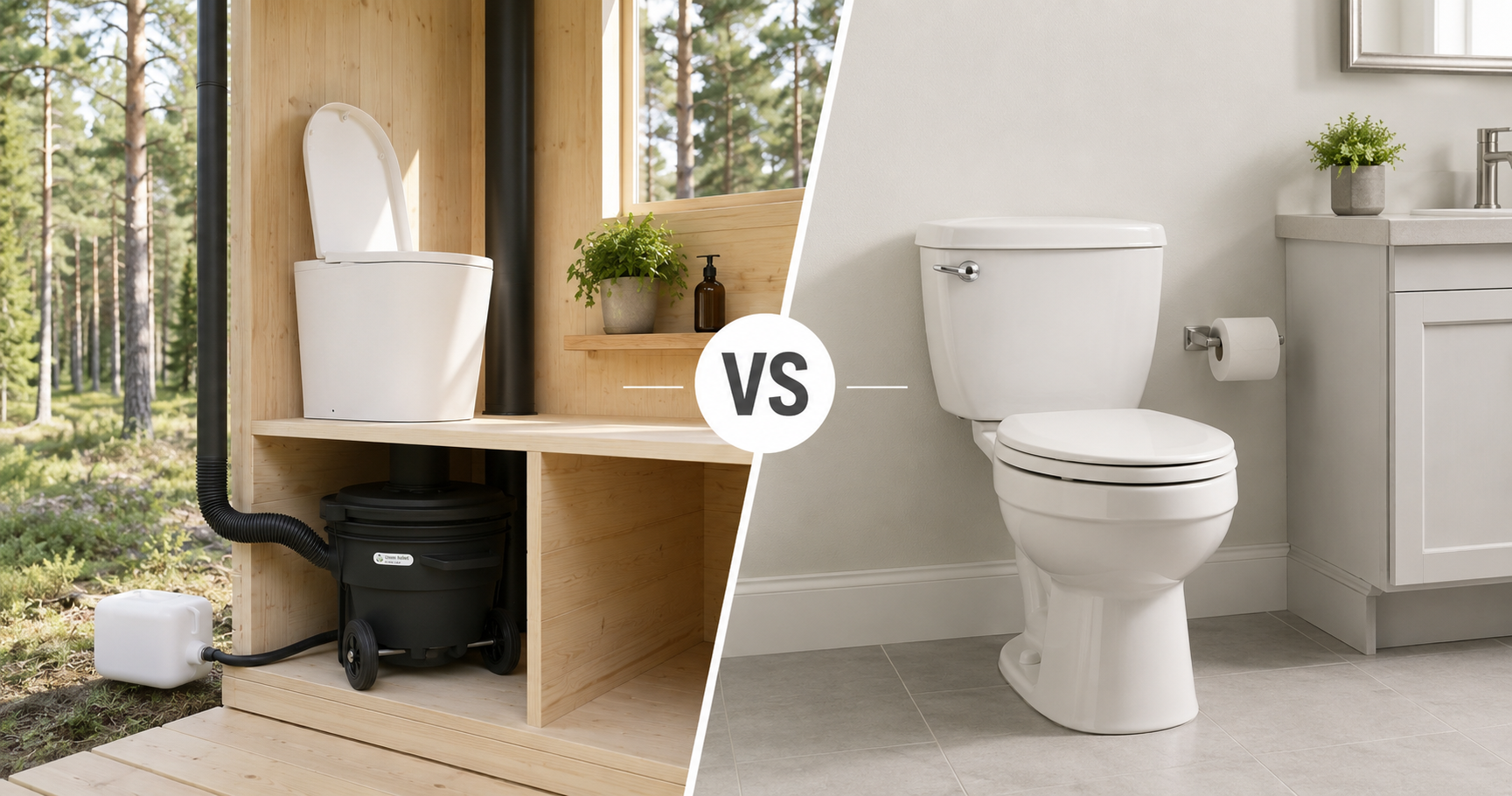
Modern Waterless Toilet vs. Traditional Water Toilet

Article updated 19.8.2026
When you’re planning the bathroom and wastewater solution for a cabin, a renovation, or an off-grid property, the real decision isn’t just which toilet to buy – it’s which wastewater system you’re committing to.
In practice there are two fundamentally different combinations:
- a dry toilet paired with greywater treatment
- a traditional water toilet paired with blackwater treatment – either a treatment plant or a sealed holding tank.
The two paths differ enormously in investment size, permitting effort, and ongoing maintenance, and in our experience the total cost difference between them can easily be a factor of ten, depending on the site.
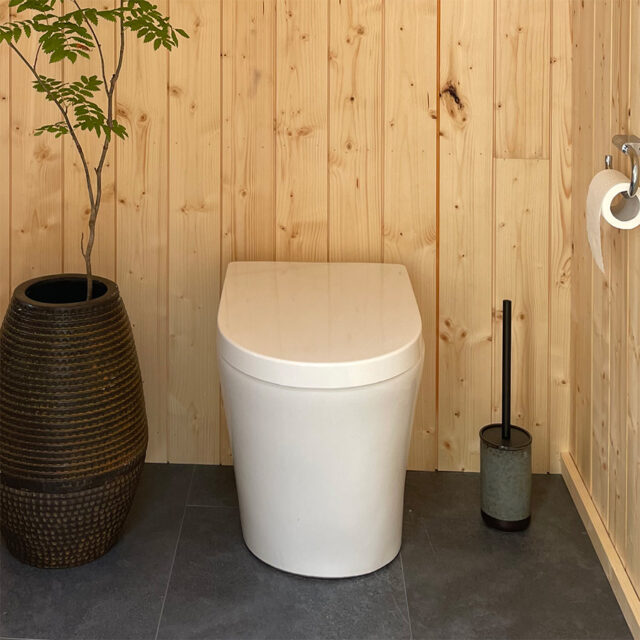
When people hear “dry toilet,” many still picture a wooden outhouse at the bottom of the garden. That image is outdated. Today’s indoor composting toilets are built to sit inside the bathroom, right next to the shower and sink, with a real porcelain seat and none of the smell people expect.
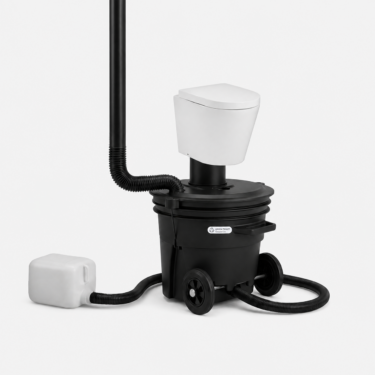
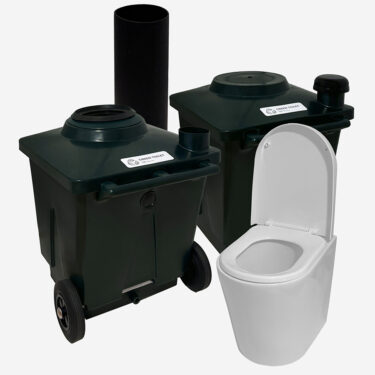
In this article we compare two of our most popular indoor models – the Green Toilet Compact Lux and the Green Toilet Lux – against a traditional water toilet connected to a septic tank or municipal sewer, so you can choose the right solution for your home, cabin, or renovation project.
Two Very Different Wastewater Systems
Combination A: Dry Toilet + Greywater Treatment
A dry toilet – for example the Green Toilet Compact Lux or Green Toilet Lux – never produces blackwater in the first place. Solids and urine go into a sealed composting container instead of a pipe, so the only wastewater left to manage is greywater: the relatively clean water from the shower, sink, kitchen, and washing machine.
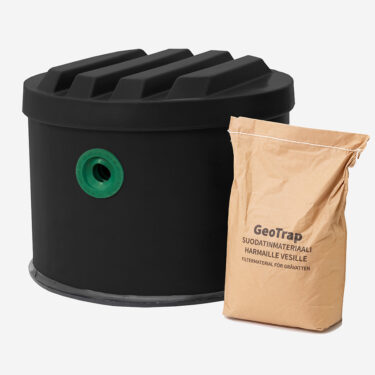
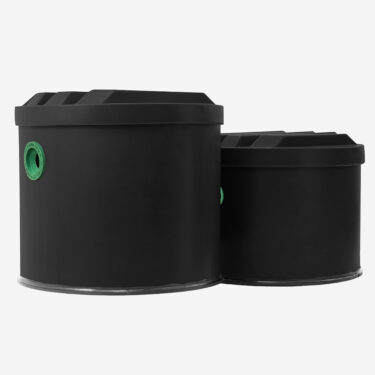
- Treatment is compact and simple: a unit like the GeoTrap Grey Water Purifier (from EUR 729) or the GeoTrap Filter Unit package (from EUR 1,359) sits at ground level, needs no digging and no electricity, and is often a one-day installation.
- Price for the Green Toilet toilet system varies between 1190 – 1790 euros depending on the combination.
- Because there’s no blackwater, many municipalities allow a lighter, faster permitting process for greywater-only systems than for a full wastewater system – always worth confirming locally, but generally the simpler path.
Combination B: Water Toilet + Blackwater Treatment
A traditional water toilet flushes solids, urine, and several liters of water together into a pipe. That mixture is blackwater, and it needs substantially more robust treatment than greywater. In practice there are two main routes: a sealed holding tank – commonly somewhere in the 3 to 12 m³ range, sized to the number of users – that stores the blackwater until it’s emptied by a waste-hauling service, or a dedicated on-site treatment plant built for blackwater (often combined with greywater). Both routes are a genuinely significant investment – not just to acquire, but to keep running.
- Investment is much larger either way: a holding tank of this size, or a factory-built treatment plant, plus digging, more complex plumbing, and usually professional installation.
- Permitting is heavier too – blackwater carries a bigger environmental and health risk than greywater alone, so the process is typically slower and more demanding.
- Running costs recur no matter which route you pick: a holding tank needs regular, paid pump-outs that get more frequent as the household grows, while a treatment plant needs a service contract, occasional part replacement, and electricity for its blower and control unit.
- Neither is a “buy once” solution: a holding tank only stores blackwater until it’s collected, and a treatment plant needs ongoing servicing – for example annual sludge removal – to keep working correctly. Both add up over the life of the property.
The Cost and Effort Gap
The two combinations aren’t a close call. A dry toilet with a compact greywater filter is typically a project in the range of a couple of thousand euros, installed in a day, with lighter permitting and no recurring service fees beyond an annual filter change.
A full blackwater solution – whether a treatment plant or a holding tank that needs regular emptying – is a different scale of project: more digging, more plumbing, heavier permitting, and running costs that continue for the life of the property. Depending on the site – ground conditions, distance to a water body, environmental protection zone, and the capacity needed – the total investment for a blackwater solution can easily be five to ten times higher than for a dry toilet and greywater setup
| Dry toilet + greywater treatment | Water toilet + blackwater treatment / holding tank | |
|---|---|---|
| Typical investment* | Roughly EUR 1,500–3,000 (toilet + greywater filter, installed) | Often EUR 10,000+ for a treatment plant, or a 3–12 m³ holding tank plus recurring pump-out fees |
| Ground work | Usually none or modest – ground-level installation | Typically required – digging, pipe routing |
| Permitting | Often a lighter, faster process (greywater only) | Heavier, slower process – blackwater carries more environmental/health risk |
| Electricity | A few watts for the toilet fan only | Treatment plant: yes, ongoing. Holding tank: no, but pump-out fees instead. heating of the property all year round necessary to avoid pipes to freeze |
| Ongoing maintenance | Self-service: container change for dry toilet, annual filter-mass change for grey water filter | Scheduled pump-outs or a maintenance contract |
| Water use | 0 L per use | Several liters per flush |
| Comfort today | Porcelain seat, indoor installation (e.g. Green Toilet Compact Lux, Green Toilet Lux) | Familiar porcelain fixture |
* Indicative figures based on typical projects – confirm current pricing and local permitting practice before publishing or quoting a customer.
Which Combination Fits Your Property?
If your property doesn’t have a full municipal sewer connection, a dry toilet paired with greywater treatment is almost always the lighter, faster, and cheaper route to a comfortable, compliant bathroom – and it no longer means compromising on comfort, thanks to indoor models like the Green Toilet Compact Lux or other Green Toilet options.
A full blackwater system still has its place, typically where a property already has – or is required to have – a complete sewer or treatment-plant connection regardless of toilet type. But it’s worth going in with open eyes about the investment, the permitting process, and the running costs that come with it.
When in doubt, it’s worth pricing both paths before committing to a renovation or a new build: the gap in total cost is usually the deciding factor.
Explore the Products
Interested in learning more about composting toilets, grey water systems, or full off-grid sanitation solutions? At Pikkuvihreä, we’ve been helping people find smart, sustainable toilet solutions for over 30 years. Whether you’re looking for a cozy outhouse or a modern interior setup, we’re happy to help.
Leave your email address below – we’ll get back to you ASAP!
